
This short documentary was created for IAT 344 at Simon Fraser University in partnership with the Museum of Vancouver. We were commissioned to create films exploring the concept of trust, for a future exhibition (Spring 2018). As an SFU Cheerleader, my team thought this would be an interesting topic to film, with a distinct link to trust, appealing visuals and a unique environment unfamiliar to many people.
TEAM
Hector Bustillos, Chantelle Lui, Alyssa Quan
ROLE
Story-boarding, camera operation, directing, sound design, interviewer.
TOOLS
Adobe Premiere Pro, Adobe After Effects, Adobe Audition
Canon T3i DSLR Camera, Canon 50mm f1.8 lens, Tamron 17-50mm f2.8 lens, Sigma 70-200mm f2.8 lens, tripods, slider, Zoom H4N Audio Recorder and lavalier microphone
PRE-PRODUCTION AND PREPARATION FOR FILMING
First, we met together as a team and came up with a treatment for our film – a document in which we determined our specific goals for the film, our angle for the story, as well as logistics such as who, what, where and when we would film.
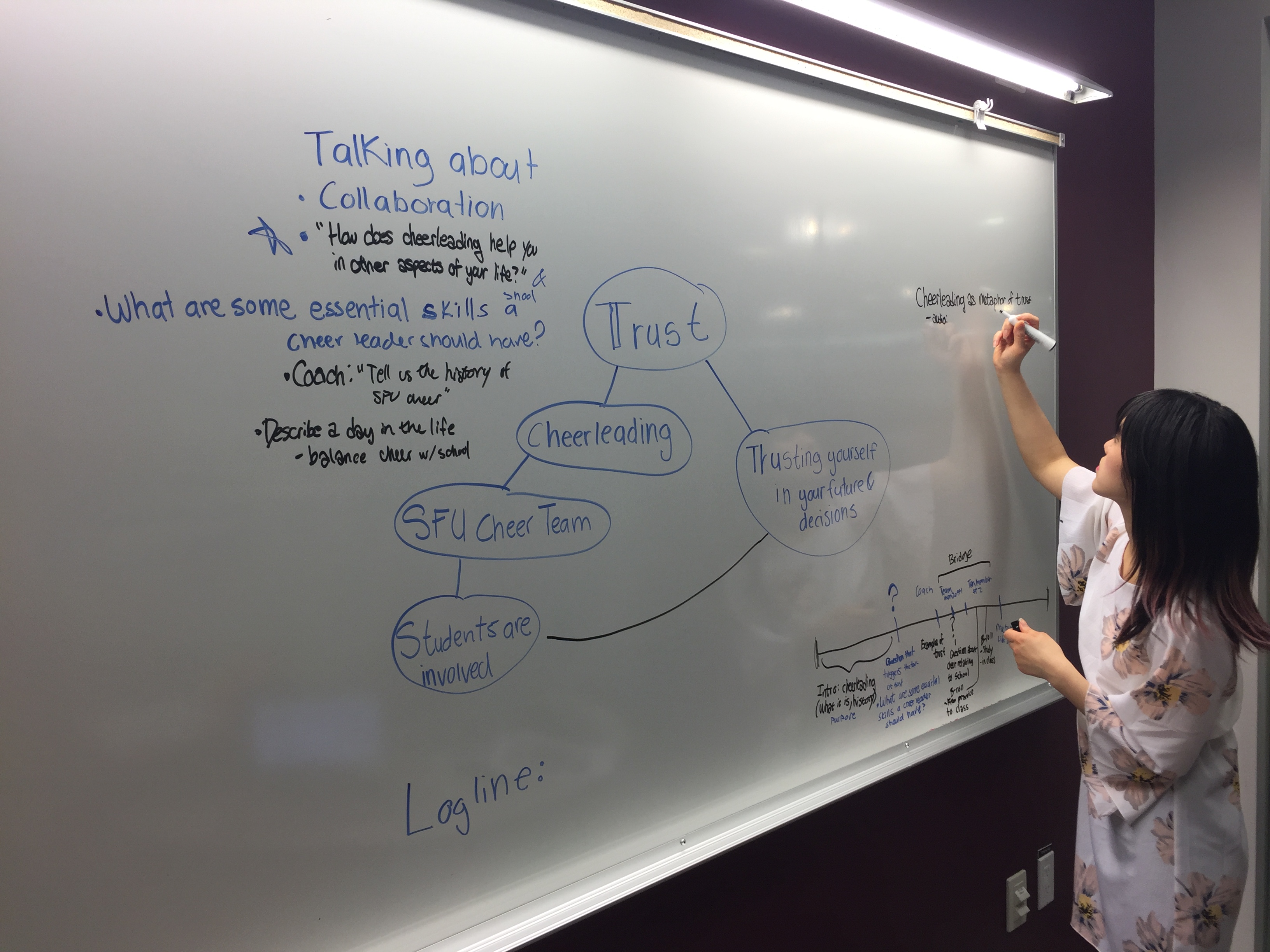
As the main liason between the cheerleading team and the documentary crew, I met with SFU Cheer’s head coach, Richard, to discuss the possibility of filming them. I presented our treatment to ensure he had a clear idea of what we would like to do. With his approval, I created and collected consent forms for the entire team. I then begun considering questions for the interview.
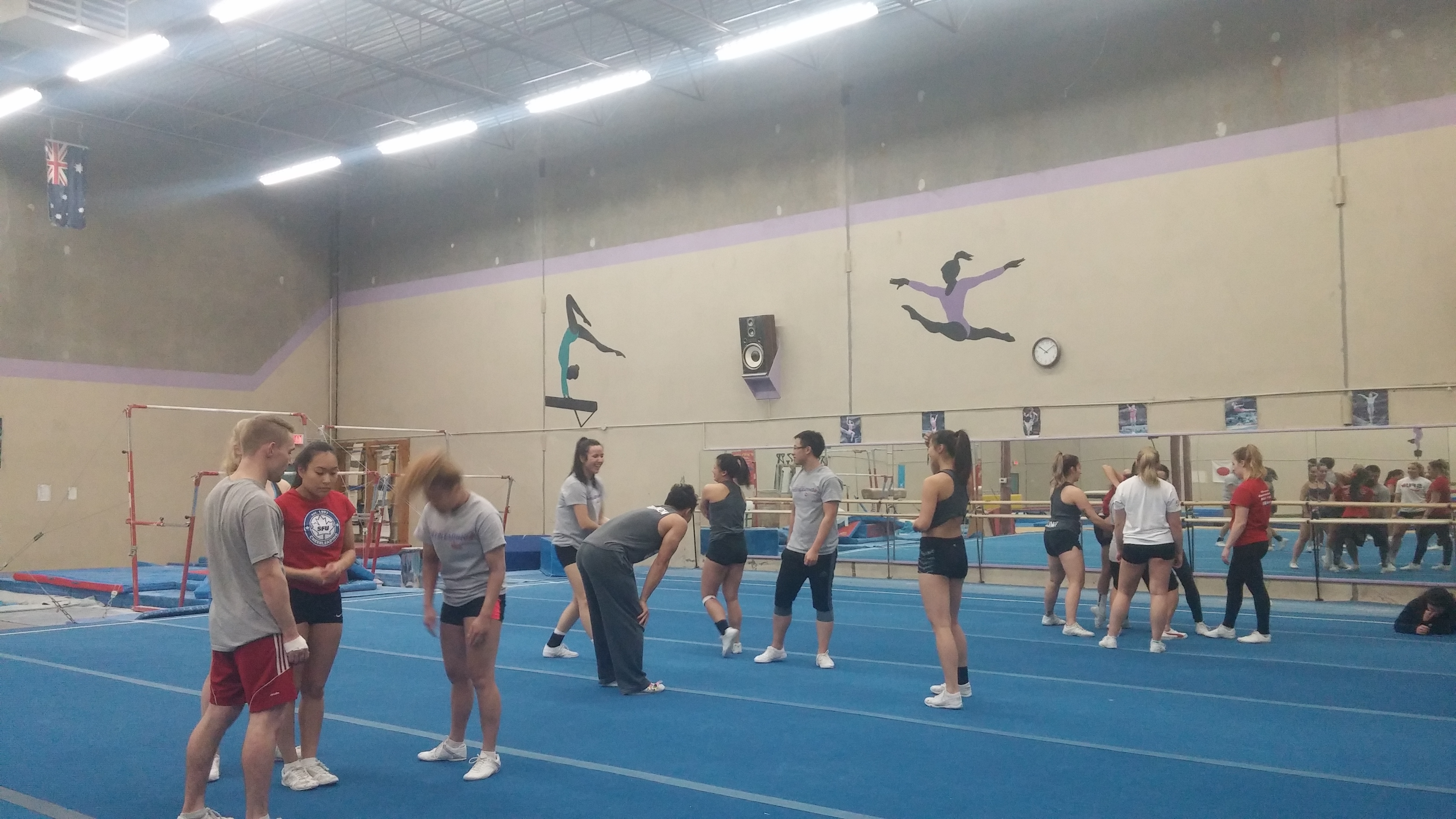
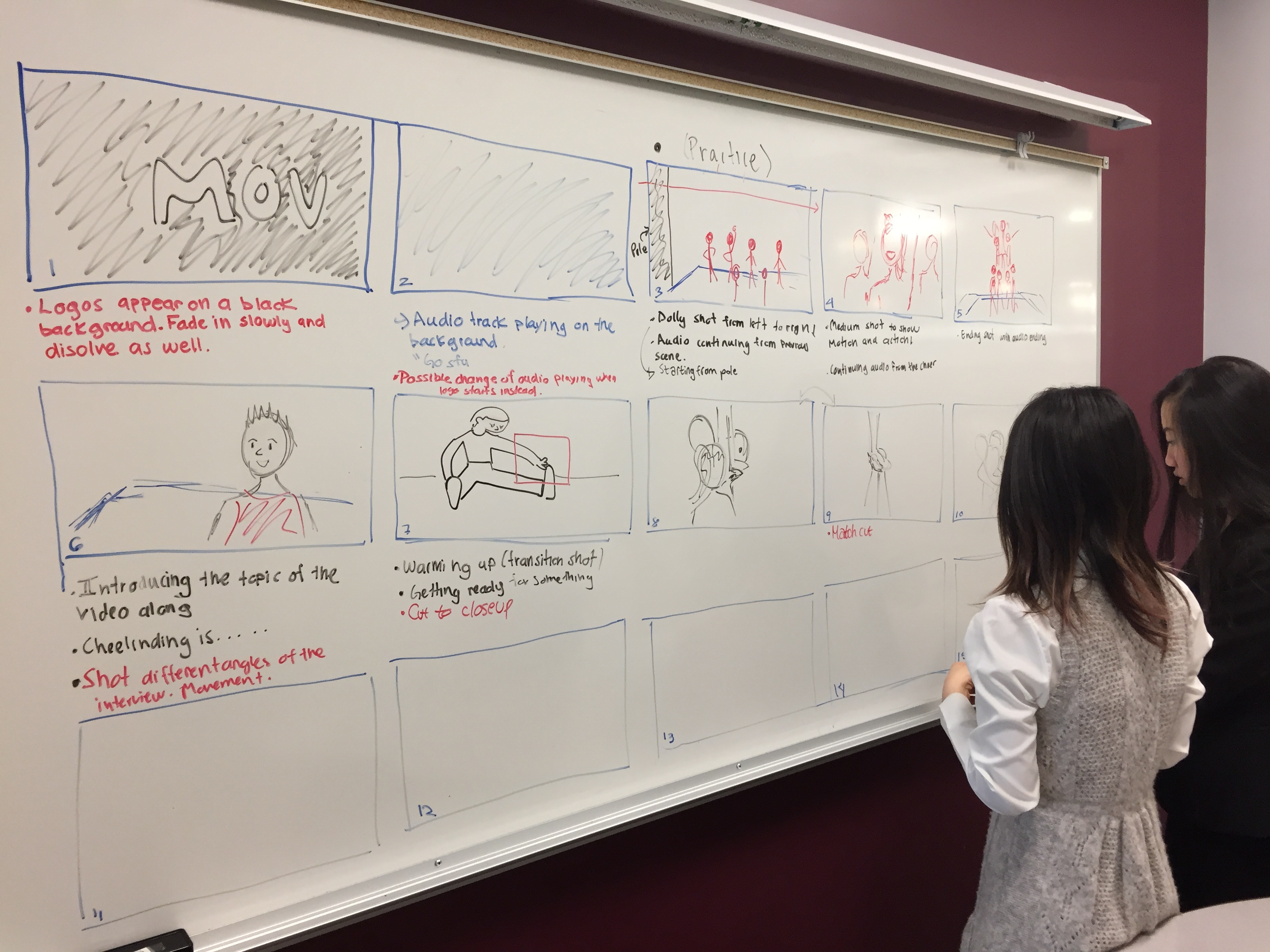
I took some photos around the gym to get a sense of the space. My film team and I then created a storyboard based of off these photos, my knowledge of the cheer team’s routine, and our ideal narrative.
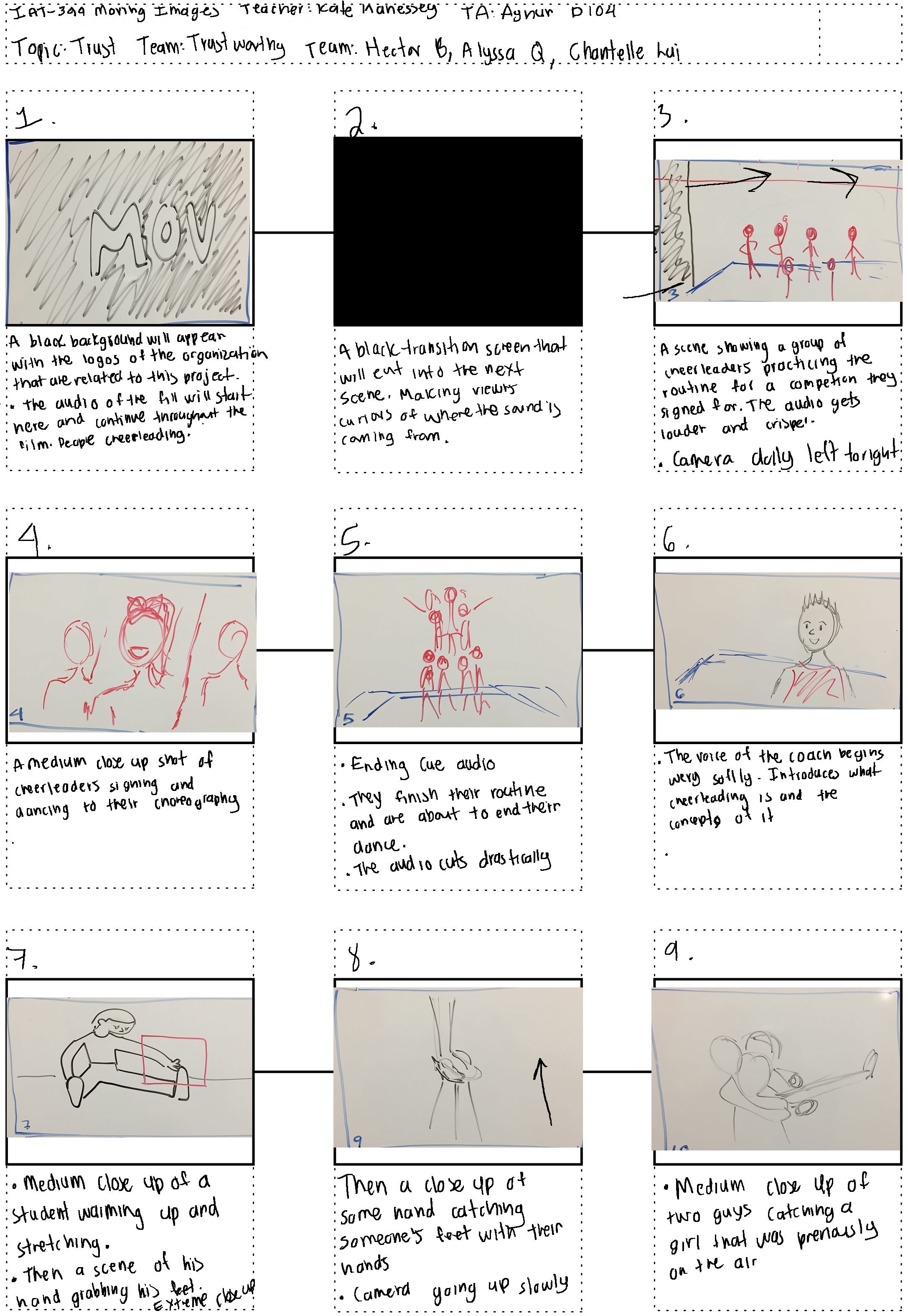
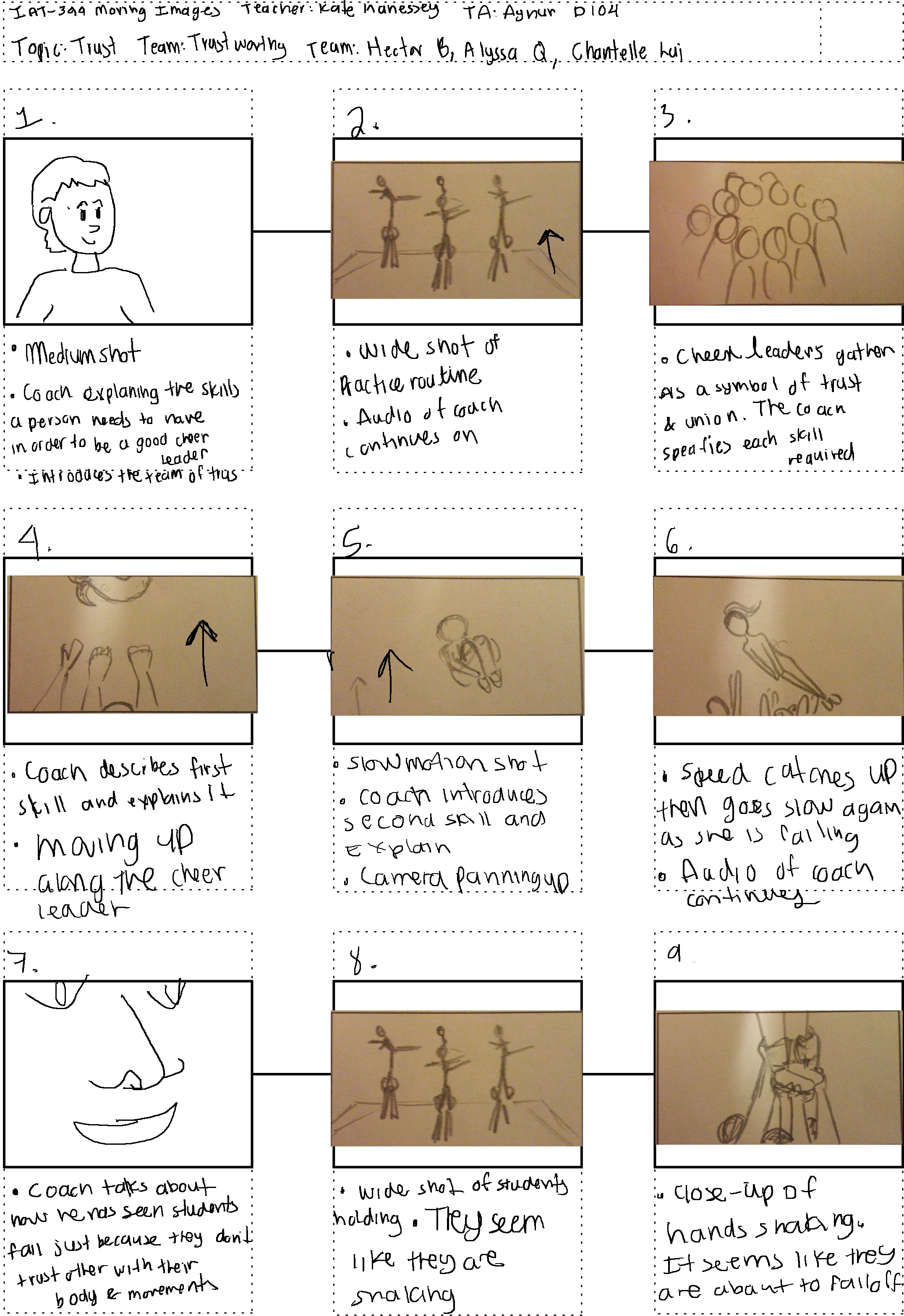
FILMING
On our first day, of filming, we began shooting the team’s stunts and practice, and quickly realized some key issues. With the high speed of the cheer team’s movement, we needed to use a higher shutter speed to capture them – however, a higher shutter speed also resulted in a darker shot. Additionally, we were unable to safely get some of the closeup shots we wanted.
Our second day shooting practice, we chose new lenses to help us with these problems. These were equipped with a lower aperture (the lens opening allowing for more light), so we could capture the speed of motion. We also brought in a lens with a high zoom, to capture the closeups we could not physically get in to shoot.

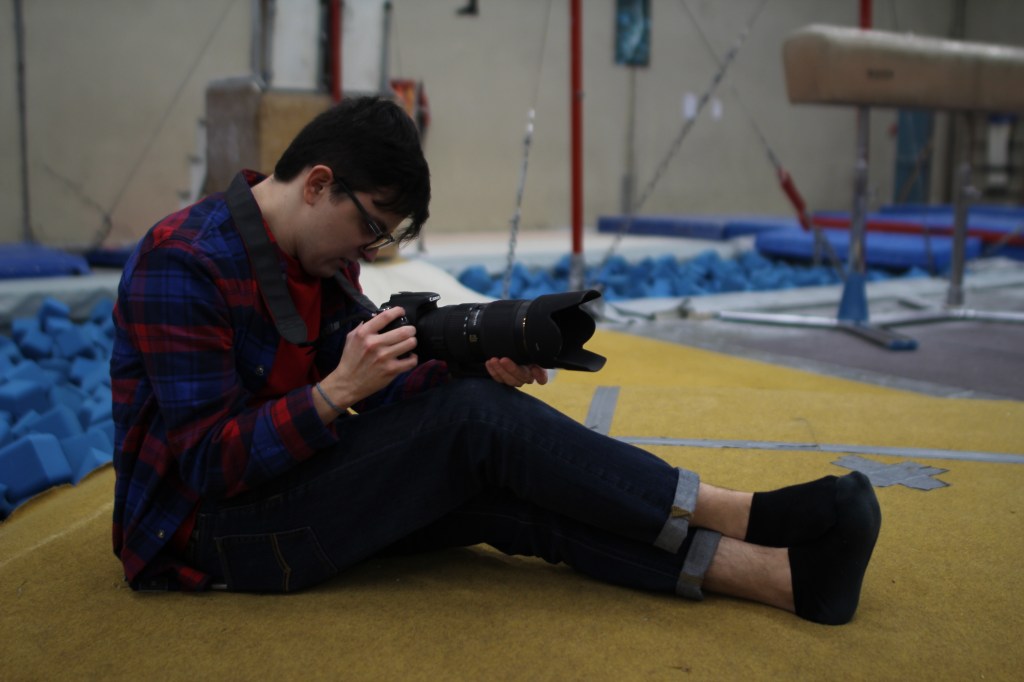
We also decided we needed some shot variety, to give a sense of the cheerleaders in their full performance glory. We travelled with the team to a cheer competition, to shoot their routine.
Finally we shot the interview with Richard. I served as the interviewer, asking a mix of my scripted questions, as well as a few improvised questions based on his responses. Through these improvised questions, I helped him delve deeper with his answers, to go beyond the literal response – for example, after speaking about what exercises the team might do in a practice, I asked him to explain more about how he preps them mentally.
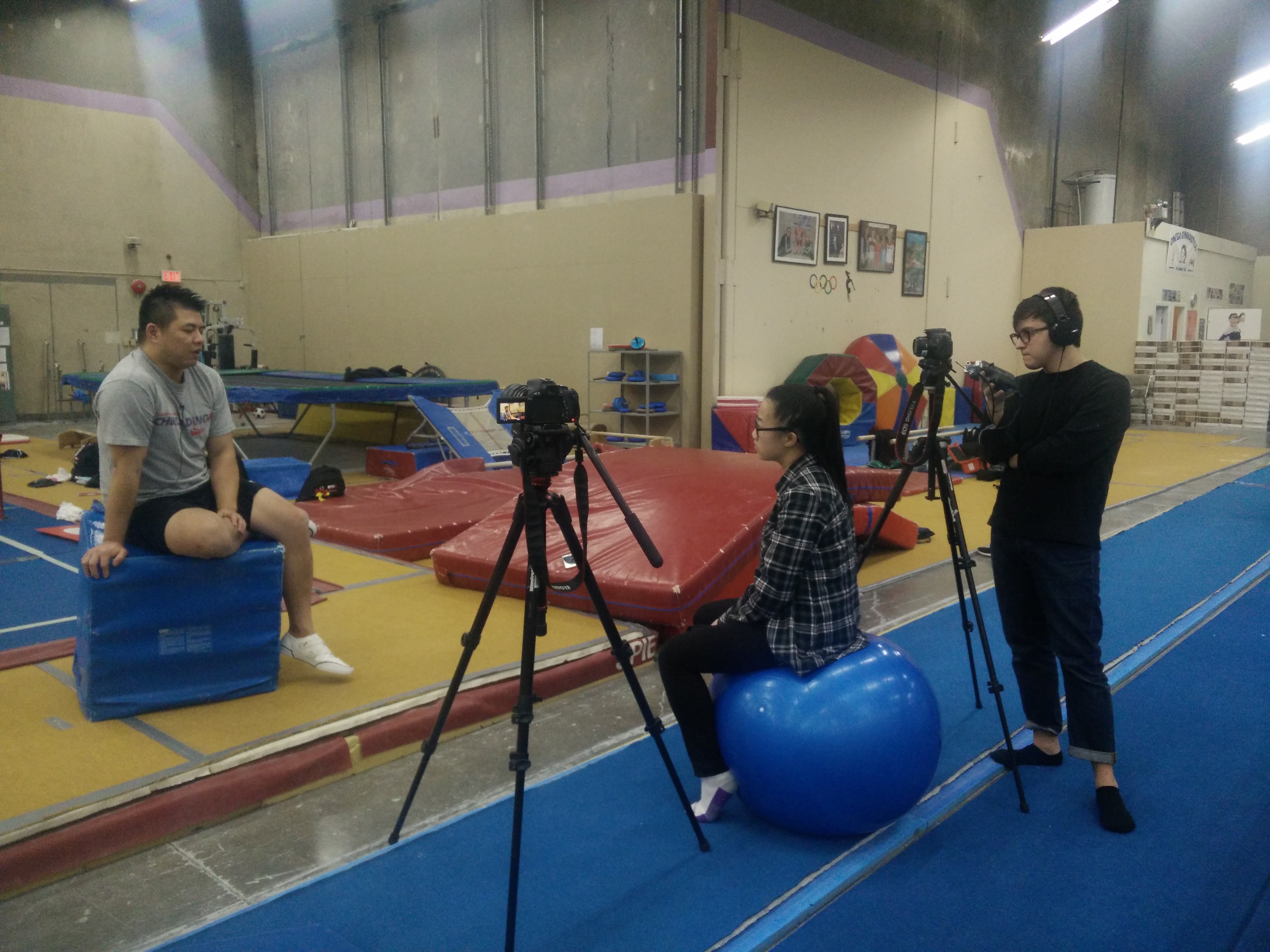
POST PRODUCTION
My main role in post production was to sort through the interview. With over 40 minutes of interview recorded, I transcribed it and colour coded it to pick out common themes.
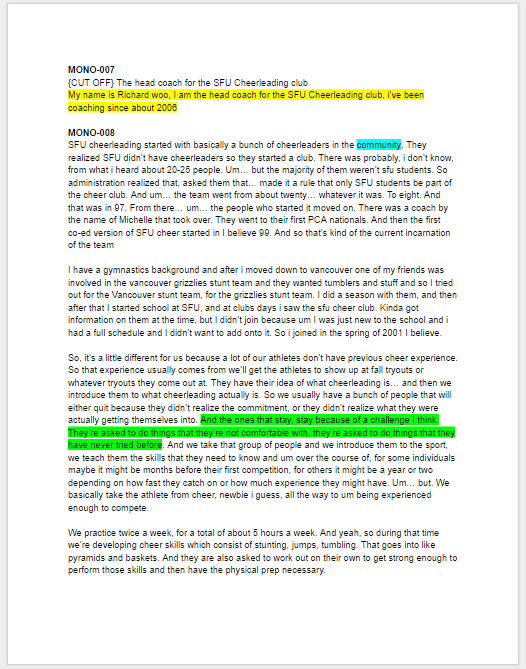
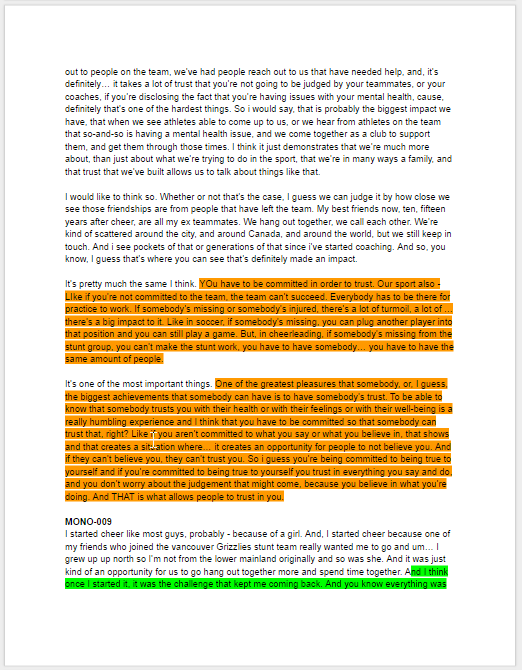
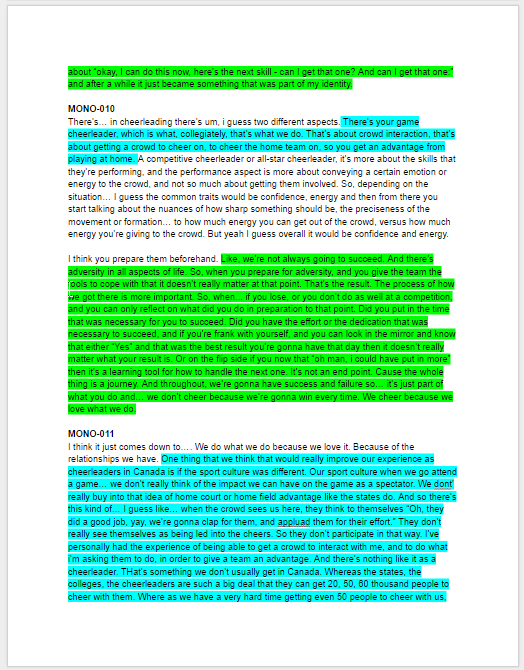
While we originally intended to present the angle of trusting in the future, we found a new theme in Richard’s words that was more appealing – he spoke strongly of the way trust is built, and the impact of this bond.
I cut together or chosen interview clips using the program Adobe Audition, and created a new audio file. Once we imported this audio into Premiere Pro, my teammates cut together a sequence based on the words. I made some small edits in this stage as well. The footage was also stabilized and colour corrected in Premiere by my teammates. Once the video was complete, I went into Premiere again and cleaned up the audio track, balanced the volume from clip to clip, removing any extra noise and boosting certain frequencies to have a richer sound quality.
REVISIONS
After our first draft was complete, we had a meeting with our Professor, TA, and Gregory Dreicer, the curator of the Trust exhibit for Museum of Vancouver. They gave us notes on the conciseness of the film, and the desire for more variety.
We went back and shot new interview, with an additional subject, Andrea Garcia. I then recut the audio to include her segment, as well as to bring more focus to Richard’s words – specifically, I needed to cut out any unnecessary or less relevant elements of the story, so all focus would be on his story of trust.
TAKEAWAYS
This project really helped me develop my skills as a storyteller, working with the interview and creating a narrative. I also learned more about film equipment.
As a member of the cheer team, as well as a member of the documentary crew, this was also a really interesting experience, as I needed to juggle my two interests, as they at times conflicted. As a cheerleader, I knew the specific way the team and I wanted to be portrayed, and had interest in portraying the sport as accurately as possible. I understood some of the feedback given on the film by the coaches, from an athletic standpoint, although it would weaken the film from a creator’s standpoint. I needed to demonstrate the perspective of my coaches to my film-making team, and served as a mediator, helping to find compromise between a shot that honoured our subjects but was still true to the message of the film we wanted to create. In the end, we were able to create a film that both parties were proud of.
 ALYSSA QUAN
Leave a comment