
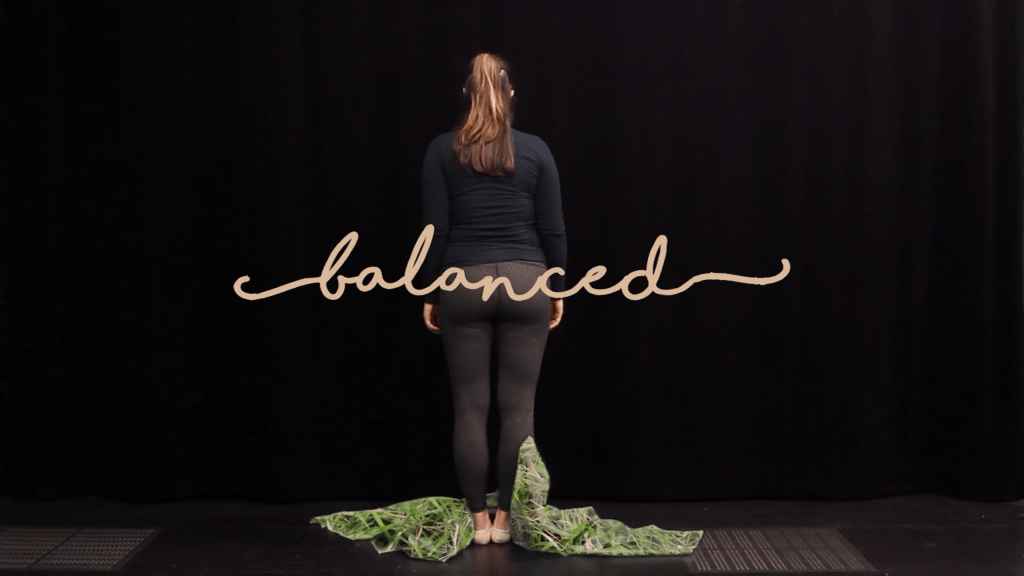
I produced this short, artistic film as a project for a film course at Simon Fraser University. With this project, I sought to bring together the art forms of dance, poetry and film, as an experiment in artistic expression. My vision for the film made use of green screen technology, a new technique to me, in a nontraditional use, which proved to be the biggest challenge of this project. By combining performance art with technology, the film explores how the expression of movement and speech can be further enhanced.
ROLE
Story-boarding, camera operation, directing, lighting, sound mixing, editing.
TOOLS
Adobe Premiere Pro, Adobe After Effects
Canon T3i DSLR Camera, tripods, lights, Zoom H4N Audio Recorder
PRE-PRODUCTION AND PREPARATION FOR FILMING
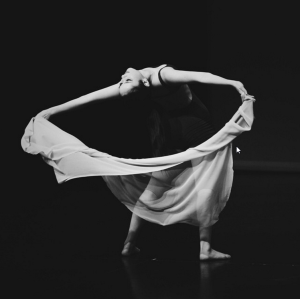
Given the challenge of incorporating Green Screen and Chromakey, I began to brainstorm my film idea. I decided to film a choreographed piece to a poem from Rupi Kaur’s milk and honey. Inspired by dances I had seen incoprorating scarves, I decided to incoprorate green screen in this way, instead of as it is conventionally used as a backdrop. A dancer would be featured, performing with a piece of green fabric. Through use of green-screening and chroma key, additional B-roll footage will be overlaid onto this fabric to enhance the emotions described by the poem.With this combination of dance and film techniques, the final film will find an external, visual representation of the emotions expressed by Rupi Kaur. While there is no specific plotline, the film serves more as an outlet for artistic expression. The audience will follow along through a range of emotions, understanding both highs and lows, with the imagery chosen serving as distinctive symbols for the emotions described.
After coming up with my film concept, I needed to ensure I had the right performers to complete my project. I reached out to a few friends, and found a dancer – Samantha Green, a fourth year FCAT student at SFU, and a voice actor – Yona Shapira, a student with acting experience in film and theatre.
I created a moodboard and storyboard to determine the look and feel of the video.


![20170211_170700[1]](https://alyssaquan.com/wp-content/uploads/2017/04/20170211_1707001.jpg?w=168&h=300) I also needed to purchase the green fabric to be used, as it was the key element of my piece. I had never worked with green screen and chroma-key before and was unsure of what was needed. With some research on the special effects methods I would be using, I chose a green fabric that let through as little light as possible, to ensure the most even colour on film, but one that was still lightweight enough to dance with. I took some test footage in the store on my phone.
I also needed to purchase the green fabric to be used, as it was the key element of my piece. I had never worked with green screen and chroma-key before and was unsure of what was needed. With some research on the special effects methods I would be using, I chose a green fabric that let through as little light as possible, to ensure the most even colour on film, but one that was still lightweight enough to dance with. I took some test footage in the store on my phone.
FILMING
I shot my primary footage in the Green Screen studio at SFU Surrey. It was my first time filming entirely on my own, which proved to be a challenge later on in my process.
I helped my subject to select her wardrobe, and gave her more detailed instructions on what I wanted the look and feel of the video to be, showing her my storyboard and moodboard.
I positioned my subject and my lights, and mounted my camera on a tripod. For some of my moving shots, as well as closeups, I unmounted it and shot my film by hand.
For my B-roll, I went out and shot around the city and at home, finding the images of nature and architecture I desired. Some shots I needed to stage, such as the pouring water, and the matches. I tried to shoot all of these images in natural light – though it was not an option in the controlled environment of the studio, I knew it would look best in the final film, so I used it as often as possible.
POST PRODUCTION
Again, this was my first time using the green screen effect. My biggest concern beginning this piece that my concept would not work with the technology. I used the program Premiere Pro to place my shots in sequence, using editing theories and techniques learned in class. I also used Premiere to do some colour correction. I then began to replace my green fabric in Adobe After Effects.


I was extremely excited to see my final result. I did not entirely expect the key to turn out so well. Some shots proved more challenging to edit than others – though this was due to the quality of the footage. With my inexperience with the camera, some shots were shaky, grainy, or not quite as sharp as others, which made it difficult to apply the effect. While I was ultimately able to achieve the effect, the process took a lot more time in these cases, as I needed to fix my camera mistakes in After Effects, and customize the green screen effect much more than usual. Through this process, I learned a lot about what to do, and what to look out for on the day of filming for future shoots.
 ALYSSA QUAN
Leave a comment